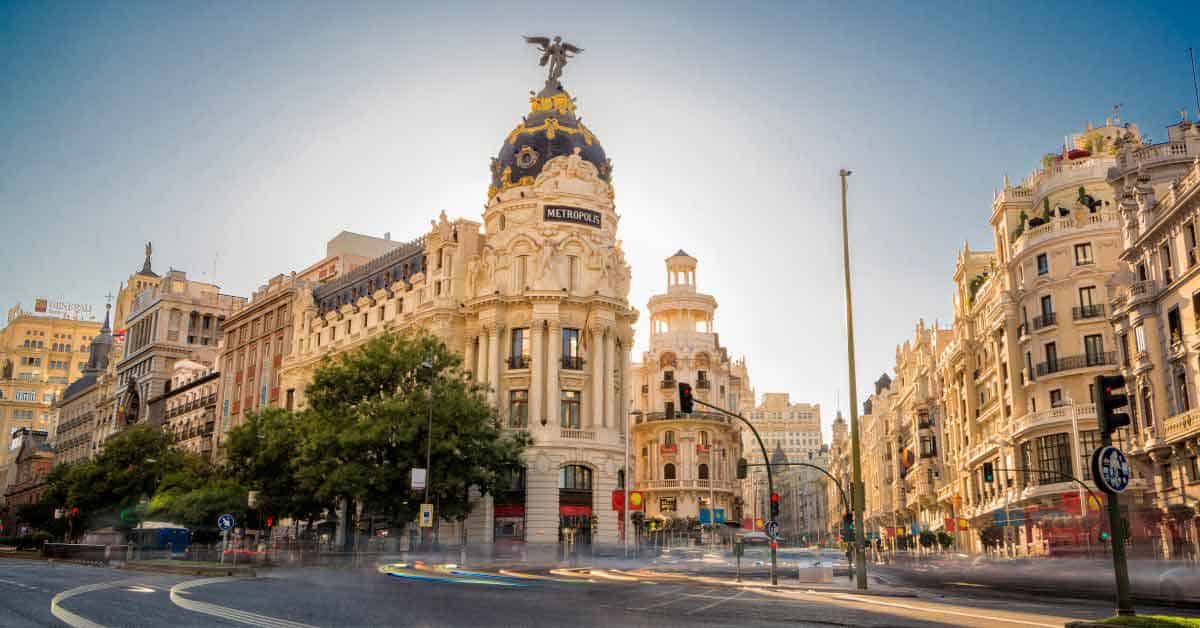

A first visit to Madrid rarely works through shock or spectacle alone. The city does not depend on one dominant landmark or one single image that explains everything at once. Its appeal grows through rhythm, scale, and atmosphere. Madrid is a capital, but it often feels more accessible than many large European cities. It has ceremonial spaces, major museums, and historic streets, yet it also has a daily warmth that makes the visitor feel close to urban life rather than separated from it.
This is why a first encounter with Madrid is most successful when it combines the obvious and the less expected: the main squares, the museum area, the park, the older streets, and the neighborhoods where people actually spend their evenings. In that flow, a traveler may move from royal architecture to a local market, from a quiet boulevard to a crowd discussing football, politics, or even something as distant as wonderland live casino, and begin to understand that Madrid is a city built not only for viewing, but for inhabiting. To want to return, one must see not just the monuments, but the structure of the city’s daily life.
Start With the Historic Core, but Do Not Stop There
For a first visit, the historic center is the right starting point. The area around Puerta del Sol, Plaza Mayor, and the nearby streets offers an introduction to Madrid’s scale and civic identity. These spaces help the visitor understand how the city presents itself: open, central, and social. People do not pass through these areas only as tourists. They also meet, walk, talk, protest, celebrate, and orient themselves there.
Puerta del Sol matters because it is both symbolic and practical. It is one of the city’s main reference points, and beginning here helps create spatial clarity. Plaza Mayor, by contrast, gives a sense of Madrid’s older formal structure. Its arcades and enclosed proportions reflect a different historical moment, one tied to public ceremony and urban order.
Yet the center alone is not enough to make someone want to return. It introduces Madrid, but it does not fully reveal it. The city becomes more memorable when the visitor continues beyond the first layer.
The Art Triangle Gives Madrid Intellectual Weight
A first visit should include the museum district not only because of its collections, but because it changes the meaning of the trip. Madrid is not just a city of plazas and nightlife. It is also a city of serious cultural concentration. The area often called the Art Triangle gives the capital intellectual weight and helps explain its role in Spanish and European cultural history.
Even for travelers who are not museum-focused, spending time in this part of the city is useful. The institutions, the surrounding boulevards, and the nearby park create a district where art, public space, and urban identity support one another. This is one of Madrid’s strengths: important cultural spaces are integrated into the city rather than isolated from it.
A first visit becomes richer when it includes this dimension. Without it, Madrid may seem welcoming and lively, but not yet deep. The museum area corrects that impression. It shows that the city’s energy is matched by memory, reflection, and historical range.
El Retiro Explains the City’s Balance
One of the key places for a first-time visitor is El Retiro. More than a park, it functions as a public organism within the city. It offers rest, but it also explains something important about Madrid: this is a capital that knows how to balance density with open space.
Walking through El Retiro helps the visitor feel the city differently. After the harder lines of the center, the park creates relief. The pace slows. Conversations, movement, reading, exercise, and leisure all coexist without pressure. This matters because a memorable city is not only one that stimulates. It is also one that gives space for pause.
A first-time traveler who spends time in El Retiro often begins to sense why people return to Madrid. The city becomes less about checking sights and more about imagining daily life there. That shift is crucial. Return travel is often inspired not by admiration alone, but by a sense of possible belonging.
Neighborhoods Such as La Latina and Malasaña Create Emotional Memory
To want to come back to Madrid, a visitor needs more than landmarks. They need neighborhoods that leave an emotional trace. Areas such as La Latina and Malasaña serve this role well because they reveal different tones of the city.
La Latina offers an older urban texture. Its streets are more irregular, its social life often spills into public space, and its rhythm is shaped by long meals, evening walks, and a sense of continuity between past and present. It is one of the places where Madrid feels less formal and more lived.
Malasaña, by contrast, reflects another side of the capital: youth, independent culture, changing taste, and a more contemporary urban identity. It helps the visitor see that Madrid is not only historic and institutional. It is also adaptive and socially expressive.
These neighborhoods matter on a first visit because they create contrast. They show that Madrid cannot be reduced to one mood. That complexity makes the city more interesting and increases the desire to return for a deeper look.
Grand Avenues and Everyday Streets Should Be Experienced Together
A strong first itinerary in Madrid should include both major axes and smaller streets. The city’s broad avenues communicate confidence and order. They frame official Madrid: administrative, monumental, and visible. But smaller side streets reveal how people actually move through the city, where they stop, and how daily life is organized.
This combination is important. If one sees only the grand spaces, Madrid can appear too controlled. If one sees only local streets, the scale of the capital may be missed. The desire to return often comes from feeling that both levels exist together: the representative city and the lived city.
Madrid Leaves the Right Kind of Incompleteness
The best first visits do not exhaust a city. They leave a sense that something remains. Madrid is especially good at this. It gives enough on a first trip to feel substantial, but it also withholds enough to create curiosity. A person may visit the center, the museum district, the park, and a few neighborhoods, and still feel that they have only begun to understand the city.
That incompleteness is part of Madrid’s power. It does not overwhelm with too much at once. Instead, it builds attachment through layers.
Conclusion
Madrid for a first visit should be approached as a city of balance: historic but active, monumental but social, cultural but easy to inhabit. To want to return, a traveler should see more than the headline sights. The center provides orientation, the museum district provides depth, El Retiro provides breathing space, and neighborhoods such as La Latina and Malasaña provide character.
What makes Madrid memorable is not one single place, but the way these parts connect. Together, they create a first impression that feels complete enough to satisfy and open enough to invite another visit. That is why the city stays in mind. It does not simply present itself. It leaves room for a second chapter.